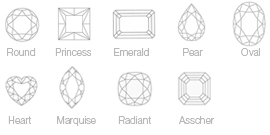
The round brilliant cut diamond is by far the most classic and the most popular. Since the first time diamonds were being cut, variations on the round shape have been used. Its 57 facets bring out the most brilliant fire and sparkle of all the shapes. The incandescent of these magnificently shaped diamonds...
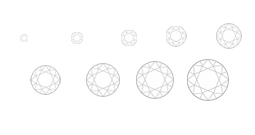
A carat (ct.) is the unit of measurement specifically used to describe the weight of a diamond (or other gemstones). A single carat is equivalent to 0.2 grams, or 200 milligrams, and is divided into 100 points. Don't confuse "carat weight" with "karat," the method of determining the purity of gold.
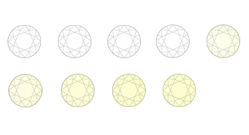
A diamond's color has a significant impact on its appearance. With its many prismatic facets, a colorless diamond reflects light into a spectrum of hues, a characteristic often referred to as "fire". The presence of noticeable color in a diamond may reduce its ability to reflect light.
When we speak about diamonds clarity, we are referring to the presence of blemishes and inclusions in the diamond. Inclusions on a diamond can be considered as the diamonds birthmark and blemishes refer to surface flaws. Blemishes and Inclusions have direct impact on its clarity and value while...
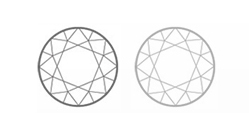
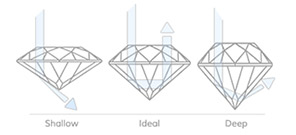
First, let's not confuse diamond "cut" with "shape." Shape refers to the general outward appearance of the diamond, (such as round, emerald, or pear). When a diamond jeweler (or a diamond certificate) says "cut," that's a reference to the diamond's reflective qualities and not the shape.
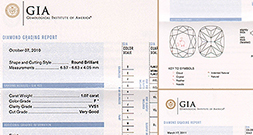
A certificate is a "blueprint" of the diamond, it tells you the diamond's exact measurements and weight, as well as the details of its cut and quality. It precisely points out all the individual characteristics of the stone. Certificates also serve as proof of the diamond's identity and value.